When sourcing bulk matcha, many international F&B buyers focus primarily on mesh size, color grade, and price point. However, the fundamental factors that determine whether matcha tastes naturally sweet, umami-rich, and smooth—without overwhelming bitterness—lie in its chemical composition and growth terroir.
1. The Chemistry of Premium Flavor: Balancing Chemical Ratios
From a sensory perspective, high-grade matcha must deliver vibrant green color, delicate foamability, low astringency, and a rich umami finish.
Translating these consumer preferences into precise technical parameters requires a strict chemical balance:
- High Amino Acids (L-Theanine) & Chlorophyll: Essential for the vivid emerald-green hue, natural sweetness, and savory umami profile.
- Balanced Polyphenols & Low Catechin-to-Amino Acid Ratio: High polyphenol levels result in strong astringency. Lowering this ratio is the secret to achieving a silky, smooth mouthfeel.
- Shading Tolerance & Tenderness: Premium tea cultivars must thrive under heavy shading (20–25 days before harvest) to accumulate free amino acids while retaining leaf tenderness.
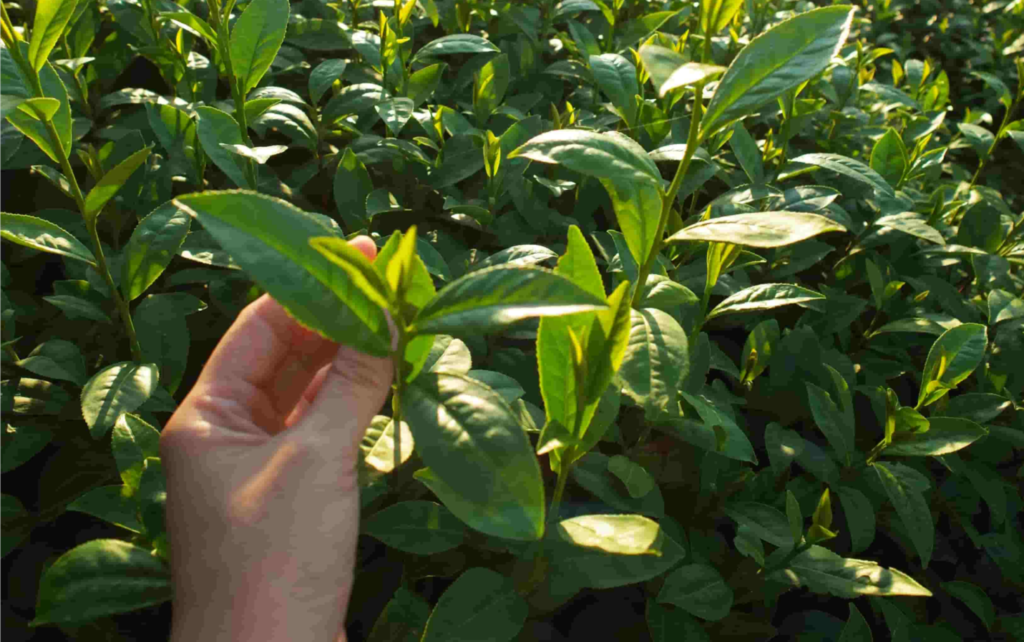
This explains why small-to-medium leaf cultivars (Camellia sinensis var. sinensis) are ideal for high-end matcha processing. While large-leaf varieties are rich in catechins and caffeine—making them too harsh for delicate tea bowls—small-leaf cultivars naturally maintain the optimal chemical balance required for fine matcha.
2. Terroir and Cultivar Heritage: Nature Meets Science
As the ancient proverb goes, “Tangerines grown south of the Huai River are sweet; grown north, they become bitter.” Cultivar selection and ecological adaptation are long-term natural processes that cannot be artificially bypassed overnight.
The tea-growing regions of East China (particularly Zhejiang Province) represent the ancestral home of these specialized small-leaf varieties. Centuries ago, monks from Japan brought tea seeds and processing methods back from Jingshan Temple in Hangzhou, laying the genetic foundation for famous cultivars used across the global matcha industry today.
While agricultural institutes continue to breed specialized matcha cultivars (such as Zhongcha 125), developing scalable supply chains takes time. Regions blessed with ideal soil microclimates, ancestral cultivars, and generations of breeding data still hold the ultimate quality advantage in the global market.
3. Sourcing Philosophy: The Leisure Leaf Standard
While marketing can build brand awareness, product consistency and flavor profile are always dictated by terroir, genetic stock, and processing precision.
At Shanghai Leisure Leaf Trading, we understand the strict compliance, batch consistency, and flavor precision required by global brands. We source exclusively from primary small-leaf tea origins, utilizing controlled shading and low-temperature milling to ensure every batch achieves an optimal amino acid ratio, bright natural color, and exceptional frothability.
We don’t just supply bulk matcha—we bridge the gap between origin science and your global product success.
Interested in exploring how our cultivars can elevate your product line? Contact our sourcing specialists today for custom sample kits and technical COA specifications.